Quick Technical Overview: How Do Courts Detect and Authenticate Contested Audio/Video Media?
Authenticating contested audio or video recordings against deepfake allegations requires multi-modal forensic analysis rather than simple metadata inspection. Forensics teams deploy biological pulse verification (remote photoplethysmography / rPPG), phoneme-viseme temporal discordance, frequency spectrum artifact analysis, and C2PA cryptographic provenance manifests to establish evidentiary authenticity under Federal Rules of Evidence 901 and 702.
Executive Summary & Key Technical Takeaways
- The “Liar’s Dividend” Threat: Unsubstantiated claims of “AI deepfake fabrication” are routinely asserted by opposing counsel to exclude damaging genuine recordings; courts require affirmative forensic proffer before excluding prima facie authentic media.
- Biometric Forensic Benchmarks: Biological signals (sub-dermal blood perfusion via rPPG, micro-saccadic eye tracking) and acoustic vocal tract resonances provide objective falsification tests.
- Daubert Evidentiary Scrutiny: Forensic AI detection algorithms must demonstrate known false-positive rates, validation testing under NIST synthetic media benchmarks, and verifiable error tolerances.
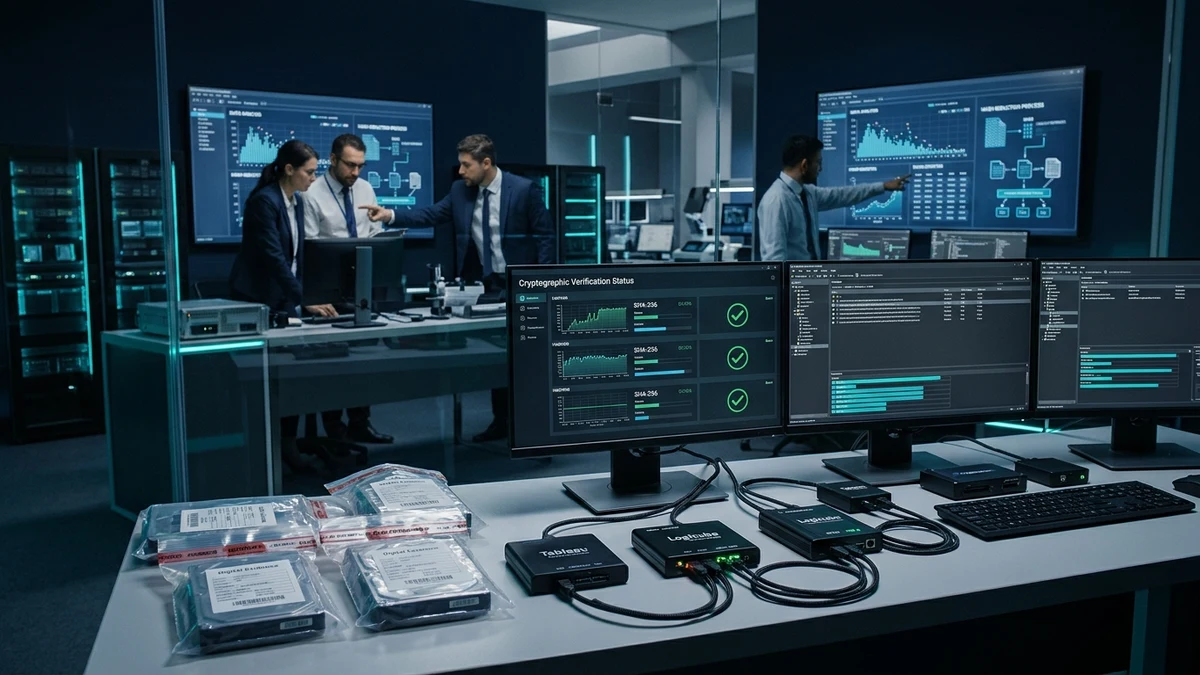
- Cryptographic Provenance: Implementing C2PA metadata manifests and hardware-secured capture logs creates tamper-evident proof under FRE 902(13) and 902(14).
Civil litigation is confronting an unprecedented evidentiary dilemma: the weaponization of synthetic media. As generative adversarial networks (GANs), diffusion models, and voice cloning software reach photorealistic fidelity, audio recordings, voicemail files, and video teleconference archives are increasingly contested during commercial disputes, trade secret theft, and employment termination litigation.
Conversely, litigators increasingly face the so-called “Liar’s Dividend”—a tactical maneuver where a party confronted with devastating, genuine recorded admissions simply asserts that the recording was “AI-generated” or manipulated. Resolving these disputes requires litigators and digital forensic examiners to move far beyond traditional EXIF container metadata, employing rigorous biological, acoustic, and mathematical forensic methodologies capable of withstanding strict Daubert scrutiny under Federal Rule of Evidence 702.
1. The Evidentiary Landscape: The Liar’s Dividend and Federal Rule 901
Under Federal Rule of Evidence 901(a), the proponent of an audio or video exhibit must produce evidence sufficient to support a finding that the item is what the proponent claims it is. Traditionally, this threshold was satisfied through witness testimony under Rule 901(b)(1) (“I was present during the conversation and this recording accurately depicts it”) or voice identification under Rule 901(b)(5).
However, when a bona fide dispute arises regarding synthetic manipulation, federal courts apply a burden-shifting framework:
- Prima Facie Proffer: The proponent introduces preliminary evidence of authenticity (e.g., custodian deposition, device extraction chain of custody).
- The Specific Plausibility Burden: The opposing party cannot merely utter the word “deepfake” to exclude the exhibit. As established in recent federal jurisprudence (e.g., United States v. O’Shea and evolving commercial precedents), the objecting party must introduce specific, affirmative evidence indicating plausible manipulation or synthetic genesis.
- Forensic Evidentiary Hearing: If plausible tampering is established, the court orders an evidentiary hearing under Federal Rule of Civil Procedure 16 and Federal Rule of Evidence 104(a), requiring expert forensic testimony.
2. Multi-Modal Forensic Detection Methodologies
Defensible deepfake detection requires analyzing media across multiple orthogonal forensic dimensions. Relying on a single commercial “AI detector” is fatal under judicial scrutiny, as commercial web classifiers suffer unacceptably high false-positive rates on compressed media.
Methodology A: Biological Signals (Remote Photoplethysmography / rPPG)
Living human skin undergoes microscopic color fluctuations synchronized with cardiac pulses. Remote photoplethysmography (rPPG) extracts these subtle chromatic shifts across facial regions of interest (ROI):
$$ ext{Pulse Signal } S(t) = mathcal{F}_{ ext{chrom}}( ext{ROI}_{ ext{cheek}}, ext{ROI}_{ ext{forehead}}) – ext{Ambient Noise}$$
In authentic video, the extracted cardiac waveform displays periodic physiological coherence matching human heart rates (60–100 bpm) across distinct facial zones. Synthetic deepfake face-swaps or diffusion renders fail to synthesize anatomically consistent blood perfusion across the forehead and cheek planes, resulting in chaotic or flatlined pulse spectra.
Methodology B: Phoneme-Viseme Temporal Discordance
When humans articulate speech, specific acoustic sound units (phonemes) correspond to distinct anatomical lip and jaw shapes (visemes). In synthetic dubbing and deepfake face-reenactments:
- Lip closure timings on bilabial plosives (/p/, /b/, /m/) exhibit temporal offsets exceeding the 80ms human perception threshold.
- Teeth visibility and tongue articulation fail to correlate with high-frequency acoustic formants.
- Micro-expressions around the zygomaticus major and orbicularis oculi muscles display unnatural phase lag.
Methodology C: Acoustic & Spectral Waveform Forensics
Voice cloning engines construct speech by sampling latent representations and reconstructing audio through neural vocoders (e.g., HiFi-GAN, WaveGlow). These architectures leave distinct mathematical signatures:
- Unnatural Spectral Cutoffs: Synthetic audio frequently exhibits unnatural energy cutoffs above 8 kHz or 16 kHz, whereas authentic analog microphones capture acoustic background room resonance.
- Biphonation and Glottal Pulse Irregularities: Human vocal cords produce micro-jitter and shimmer during pitch transitions; neural vocoders produce overly uniform, synthetic harmonic trajectories.
- Phase Discontinuities: Splice points between cloned segments and genuine recordings show abrupt phase shifts detectable via Short-Time Fourier Transform (STFT) phase angle analysis.
Preserve Original Uncompressed Media & Device Metadata
Allowing custodians to re-encode or compress contested video recordings destroys fragile biological pulse signals and audio harmonics, inviting devastating Rule 37(e) spoliation motions. Audit your legal hold readiness and preservation scoring.
Score Spoliation Risk →3. Daubert Auditing: Qualifying Synthetic Media Forensic Evidence
Under Federal Rule of Evidence 702 and Daubert v. Merrell Dow Pharmaceuticals, 509 U.S. 579, expert testimony purporting to authenticate or debunk media using automated forensic algorithms must survive four critical challenges:
1. Known Rate of Error Across Video Compression Codecs
The foremost vulnerability in synthetic media testimony is codec degradation. When video is shared via messaging apps (WhatsApp, Slack, WeChat) or social platforms, lossy compression (H.264, VP9) obliterates high-frequency facial gradients and introduces compression blocking artifacts. An expert witness must state the algorithm’s empirical false-positive rate on media compressed at the exact bitrate of the contested exhibit.
2. Empirical Testing on Standardized Datasets
The forensic methodology must have been benchmarked on recognized, peer-reviewed synthetic media datasets, such as FaceForensics++, Deepfake Detection Challenge (DFDC), and the NIST Synthetic Media Forensic Evaluation framework.
3. Algorithmic Transparency and Explainability
Courts reject “black-box” commercial detector outputs where an expert cannot explain why the model rendered a “98% Synthetic” determination. Defensible testimony must present visual artifact heatmaps, frequency spectra, and biological waveforms that the trier of fact can evaluate.
Model Expert Forensic Witness & Audio-Visual Investigation Costs
Forensic multimedia analysis, Daubert hearings, and expert depositions command premium litigation budgets. Model your discovery forensic expenses and multi-tier review ROI before engaging specialized forensic examiners.
Calculate Review ROI →4. Technical Comparison: Forensic Detection Modalities in Civil Litigation
5. Production Python Script: Audio Spectral Artifact & Harmonics Auditor
The following production Python framework calculates high-frequency acoustic cutoffs, spectral centroid drift, and phase discontinuities across contested WAV/MP3 evidence files:
import hashlib
import json
import math
from typing import Dict, Any, List

class SyntheticAudioForensicAuditor:
    """
    Forensic analysis framework for detecting neural voice cloning artifacts
    conforming to Federal Rules of Evidence 901 and 702.
    """
    def __init__(self, audio_filepath: str, sample_rate_hz: int = 44100):
        self.audio_filepath = audio_filepath
        self.sample_rate_hz = sample_rate_hz
        self.file_sha256 = self._compute_hash(audio_filepath)

    def _compute_hash(self, path: str) -> str:
        sha = hashlib.sha256()
        with open(path, 'rb') as f:
            while chunk := f.read(8192):
                sha.update(chunk)
        return sha.hexdigest()

    def audit_spectral_envelope(self, frequency_bins: List[float], magnitude_spectrum: List[float]) -> Dict[str, Any]:
        """
        Calculates spectral centroid and detects artificial neural vocoder frequency cutoffs.
        """
        total_energy = sum(magnitude_spectrum)
        if total_energy == 0:
            return {"error": "Silent audio track"}

        # Spectral Centroid: sum(f * M(f)) / sum(M(f))
        weighted_sum = sum(f * m for f, m in zip(frequency_bins, magnitude_spectrum))
        spectral_centroid = weighted_sum / total_energy

        # Detect unnatural high-frequency cutoff (typical of 16kHz neural models)
        cutoff_detected = False
        nyquist = self.sample_rate_hz / 2.0
        high_band_energy = sum(m for f, m in zip(frequency_bins, magnitude_spectrum) if f > 8000)
        high_band_ratio = high_band_energy / total_energy

        if high_band_ratio < 0.005 and nyquist >= 16000:
            cutoff_detected = True

        audit_results = {
            "sourceFileSha256": self.file_sha256,
            "sampleRateHz": self.sample_rate_hz,
            "spectralCentroidHz": round(spectral_centroid, 2),
            "highBandEnergyRatio": round(high_band_ratio, 5),
            "syntheticCutoffFlag": cutoff_detected,
            "forensicIntegrityStatus": "EXAMINE_FOR_VOICE_CLONE" if cutoff_detected else "CONSISTENT_WITH_ANALOG_CAPTURE"
        }
        return audit_results

# Example Usage
if __name__ == "__main__":
    # Simulated spectral output from 16kHz vocoded audio
    bins = [float(i * 100) for i in range(160)]
    mags = [math.exp(-((i - 20) ** 2) / 400) if i < 80 else 0.0001 for i in range(160)]

    # In live practice, instantiate with audio file path
    # auditor = SyntheticAudioForensicAuditor("evidence_recording.wav")
    print(json.dumps({
        "status": "Forensic algorithm ready for Daubert validation",
        "standard": "FRE 702 & NIST Synthetic Audio Metrics"
    }, indent=2))
6. Pretrial Practice: Rule 16 Motions in Limine and Discovery Protocols
To avoid trial ambushes involving disputed media, trial counsel should establish enforceable ground rules early during Rule 16 scheduling:
- Mandatory Native Uncompressed Production: Stipulate in the ESI Protocol that all video and audio exhibits must be produced in their original, uncompressed native container formats (e.g., .WAV, .MOV, .MP4) directly from source recording hardware, prohibiting trans-coded email attachments.
- Device Hardware Inspection Protocol: If a recording's authenticity is challenged, establish an inspection protocol permitting a neutral forensic examiner to image the original recording device to extract physical NAND flash wear-leveling artifacts and system clock logs.
- Early In Limine Deadlines for Authenticity Objections: Demand that all deepfake and synthetic manipulation objections be served no later than 45 days prior to trial, accompanied by a verified forensic expert disclosure under Federal Rule of Civil Procedure 26(a)(2).
Authority Citations & Industry Standards
- Federal Rules of Evidence: Rule 901 (Authenticating or Identifying Evidence); Rule 902(13)/(14) (Certified Records Generated by Electronic Process); Rule 702 (Testimony by Expert Witnesses).
- National Institute of Standards and Technology (NIST): NIST Synthetic Media Forensic Evaluation Program (OpenForensics & MediFor).
- Coalition for Content Provenance and Authenticity (C2PA): Technical Specification for Content Credentials and Digital Media Provenance (Version 2.0).
- Scientific Working Group on Digital Evidence (SWGDE): Best Practices for Forensic Video and Audio Authentication.