Quick Technical Overview: How Do Enterprises Defend Against & Authenticate Deepfake Social Engineering?
Defending against deepfake social engineering and voice cloning requires replacing informal verbal approval checks with Zero-Trust cryptographic verification (FIDO2 out-of-band step-up challenges), real-time acoustic and biometric telemetry, and post-incident synthetic media forensics. For courtroom disputes, verifying C2PA Content Credentials, PRNU camera sensor noise, and spectral audio artifacts establishes integrity under Federal Rule of Evidence 901.
Executive Summary & Synthetic Media Defense Framework
- Next-Gen Executive Impersonation: Attackers now combine compromised email recon with real-time neural voice synthesis (vishing) and live video conferencing deepfakes to authorize fraudulent wire transfers.
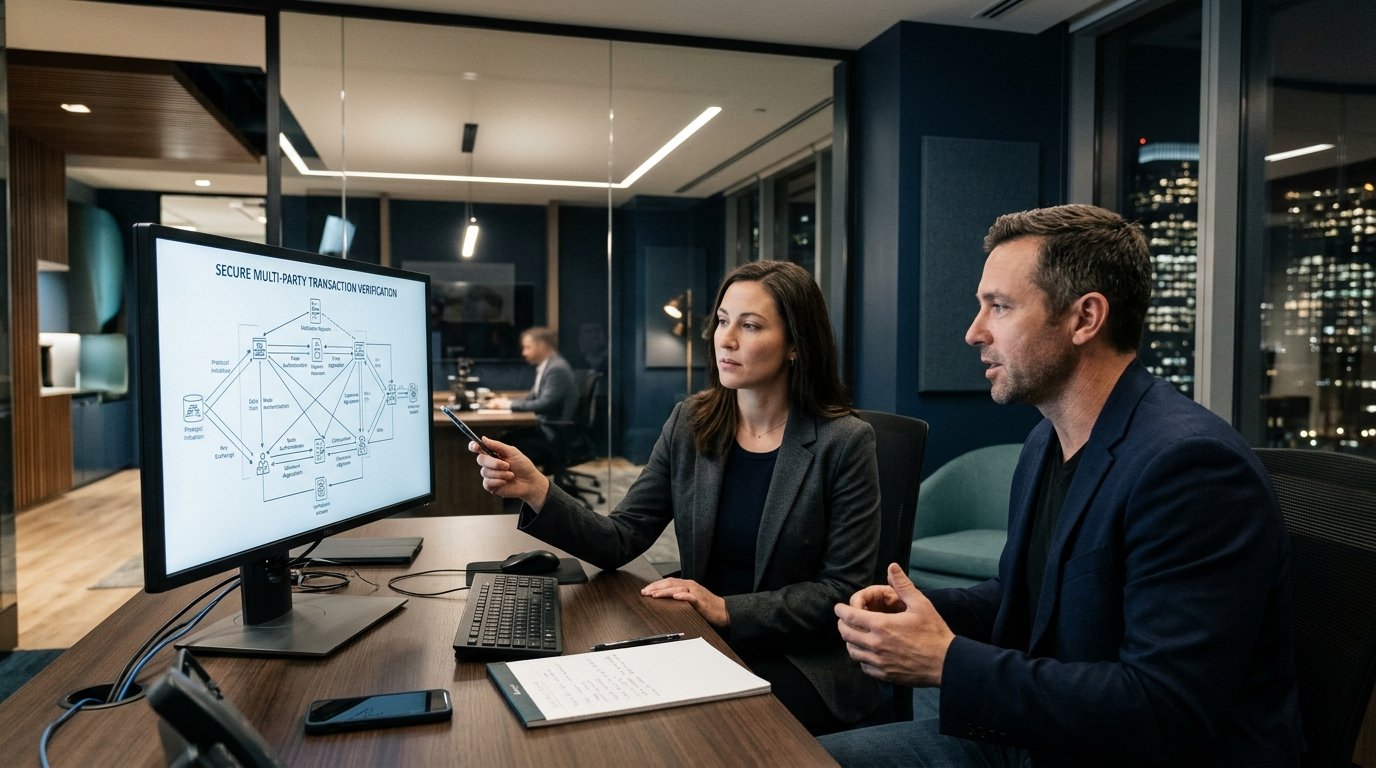
- Zero-Trust Call Verification: Eliminating reliance on visual or vocal recognition by mandating cryptographic FIDO2 challenges and out-of-band multi-party treasury sign-off gates.
- Multi-Layer Forensic Detection: Auditing container metadata, C2PA provenance manifests, PRNU pixel noise consistency, and vocoder spectrogram phase discontinuities.
- FRE 901 & Evidentiary Authentication: Preserving raw call recordings, WebRTC session dumps, and network PCAP captures with SHA-256 chain of custody to survive deepfake authenticity challenges in litigation.
1. Threat Evolution: Deepfake Social Engineering, Voice Cloning & Executive Impersonation
For over a decade, Business Email Compromise (BEC) relied primarily on spoofed sender domains, lookalike display names, and hijacked reply-to headers. While modern enterprises largely neutralized basic spoofing through strict SPF, DKIM, and DMARC policies—covered in our Email Header Analysis & Anti-Spoofing Protocol Guide—adversaries have escalated rapidly to a far harder perimeter: real-time deepfake social engineering.
Using fewer than 15 seconds of publicly scraped earnings calls, conference keynotes, or podcast clips, threat groups now synthesize high-fidelity voice clones and live WebRTC facial masks capable of impersonating Chief Financial Officers, General Counsel, and board directors during real-time Zoom, Microsoft Teams, and phone calls. In parallel, legal departments face an inverse evidentiary challenge known as the “liar’s dividend,” where litigants challenge genuine audio recordings or security footage by asserting the evidence is AI-generated.
Why Traditional Security & Authentication Controls Fail Against Synthetic Media
- Failure of “Call-Back” Audio Verification: Standard corporate treasury playbooks instructing analysts to “verify wire changes over the phone” fail when adversaries spoof caller IDs and converse dynamically using sub-400ms latency neural voice pipelines.
- Bypassing Perimeter Email Gateways: Multi-channel attacks begin with a benign reconnaissance call or Slack guest invite rather than malicious email links, leaving legacy Secure Email Gateways (SEGs) blind until post-incident SIEM correlation.
- Judicial Scrutiny Under FRE 901 & FRE 702: Under Federal Rule of Evidence 901(a) and FRE 901(b)(5)/(9), a party offering contested audio or video evidence must produce technical proof establishing that the recording accurately depicts an authentic event and has not been synthetically fabricated or altered.
To bridge corporate incident response and litigation readiness, cybersecurity operations and digital forensics specialists must partner directly with Executive Impersonation & BEC Defense Teams under a unified verification architecture.
2. Technical Forensics: Multi-Layer Synthetic Media Detection & C2PA Provenance
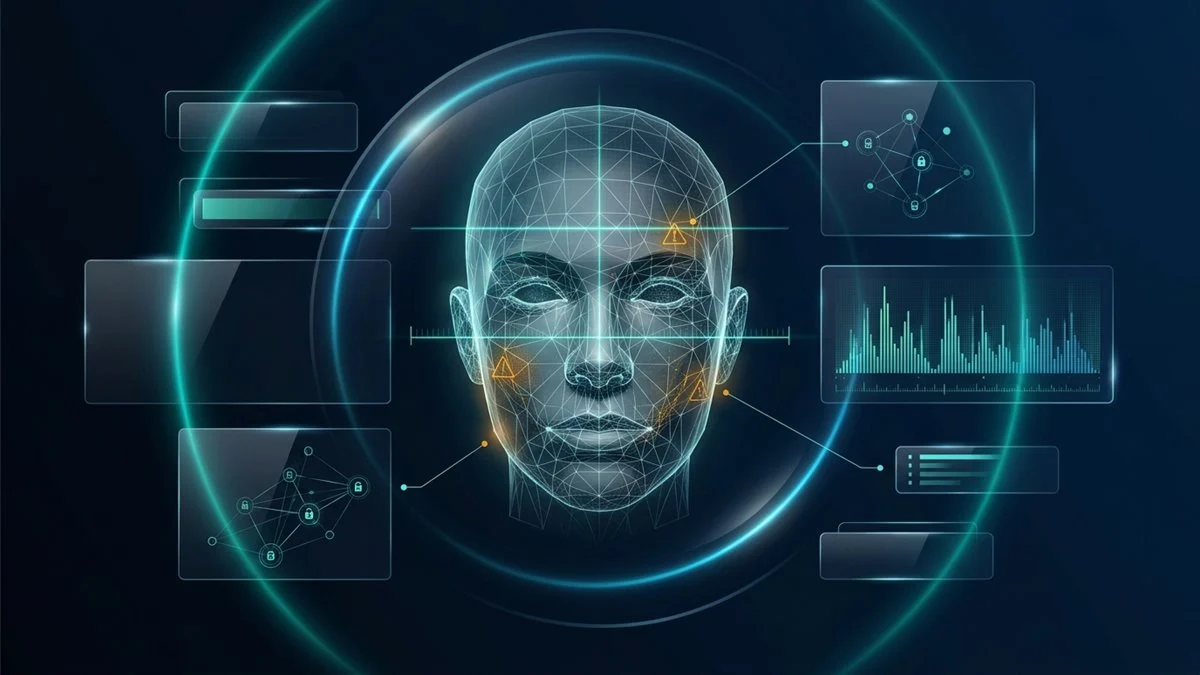
Relying solely on a single “AI detector score” is scientifically indefensible in enterprise incident response and inadmissible under Daubert / FRE 702 expert standards. A rigorous synthetic media forensics methodology evaluates four independent layers of physical, acoustic, cryptographic, and structural evidence.
Four-tier examination pipeline verifying provenance signatures, media container integrity, acoustic spectrogram anomalies, and optical sensor noise consistency.
moov, udta), Lavf/FFmpeg encoder strings, GOP frame cadence, and quantization tables.Forensic Detection Signals Compared: Strength & Courtroom Evidentiary Weight
When defending enterprise wire fraud cases or authenticating internal recordings, forensic examiners weigh cryptographic provenance against physical signal analysis:
| Verification Method | Technical Mechanism Examined | Common Adversarial Evasion Risk | Evidentiary Weight (FRE 901) |
|---|---|---|---|
| C2PA Content Credentials | X.509 cryptographic certificates & hard-bound SHA-256 pixel/frame hashes embedded inside JUMBF metadata boxes | Metadata stripping during social media re-uploads or screen recording | Deterministic Proof (Cryptographic certainty when intact) |
| PRNU Camera Sensor Noise | Microscopic silicon manufacturing noise fingerprint unique to a physical CMOS sensor across video frames | Severe video re-compression or synthetic frame interpolation obscures fine noise floor | High Probative Value (Matches known physical recording device) |
| Acoustic & Vocoder Spectrograms | Log-mel spectrogram harmonics above 8 kHz, micro-glottal cadence, and synthetic phase alignment signatures | Low-bitrate PSTN phone codecs (8 kHz G.711) clip upper frequency bands | Strong Corroborative (Best paired with carrier SIP CDR telemetry) |
| rPPG Vascular Pulse & Eye Reflections | Sub-pixel RGB hemoglobin color oscillations in facial skin synchronized with authentic heart rate (60–100 BPM) | Poor lighting conditions or heavy video conference smoothing filters | Diagnostic Signal (Effective for real-time conference alerts) |
C2PA Cryptographic Provenance & Hardware Root of Trust
Endorsed by the Coalition for Content Provenance and Authenticity (C2PA) and referenced across NIST AI Risk Management guidance, hardware-backed Content Credentials represent the definitive architectural shift from “detecting fakes” to “proving authenticity.” When mobile devices, conference bridges, or body-worn cameras sign media at the exact millisecond of capture, any subsequent deepfake splice immediately breaks the cryptographic manifest signature.
3. Enterprise Zero-Trust Defense Against Executive Impersonation Attacks
Because neural rendering models improve quarterly, cybersecurity architects cannot rely solely on employees “spotting glitches” during stressful executive phone calls. Preventing seven-figure BEC/deepfake fraud demands binding identity assurance directly into organizational action workflows as defined in our Zero Trust Security Architecture Blueprint.
Five Mandatory Zero-Trust Controls for Financial & Legal Approvals
- Phishing-Resistant FIDO2 / WebAuthn Step-Up Challenges: No treasury payment modification, vendor bank detail update, or privileged document export should execute based solely on voice or video consent. Require an authenticated out-of-band push approval signed via FIDO2 hardware keys or corporate SSO.
- Dynamic Shared-Secret Challenge Protocols: In high-urgency video calls requesting non-standard asset moves, participants must trigger a pre-registered rotating challenge token verified through an independent encrypted messaging channel.
- SIP / WebRTC Endpoint Telemetry Logging: Retain Session Initiation Protocol (SIP) headers, STIR/SHAKEN attestation levels (A, B, or C), and Teams/Zoom participant IP telemetry inside your SIEM for immediate post-incident SOC Correlation & Threat Hunting.
- C2PA Signing for Internal Corporate Communications: Enable cryptographic watermarking and enterprise domain verification on official investor announcements and executive town-hall broadcasts.
- Incident Preservation Runbooks: Whenever a deepfake attack occurs, preserve raw server-side conference recordings, WebRTC gateway logs, and memory captures before transient buffers rotate, maintaining full compliance with Digital Evidence Chain of Custody Standards.
4. Forensic Acquisition & Automated Integrity Screening Pipeline (Python Engine)
When SOC analysts or forensic investigators receive a contested audio clip or video conference file, immediate triage must never overwrite the original binary. Examiners run non-destructive intake scripts that generate dual cryptographic hashes (SHA-256 and MD5), scan raw binary headers for C2PA JUMBF provenance boxes alongside telltale synthetic encoding signatures (e.g., Lavf / neural pipeline metadata), and log an immutable forensic intake certificate for FRE 902(14) admissibility.
# Non-Destructive Deepfake Triage & C2PA Provenance Intake Engine (FRE 901 / 902(14))
import hashlib, os
from datetime import datetime, timezone

def screen_media_integrity(file_path: str) -> dict:
    """
    Computes immutable intake hashes and performs binary container triage
    for C2PA JUMBF provenance markers and synthetic re-encoding artifacts.
    """
    if not os.path.isfile(file_path):
        raise FileNotFoundError(f"Evidence file not found: {file_path}")

    sha256_hasher = hashlib.sha256()
    c2pa_jumbf_detected = False
    encoder_flags = []

    # Known non-camera / synthetic re-muxing markers found in container metadata atoms
    suspicious_markers = [b"Lavf", b"FFmpeg", b"DeepFaceLab", b"ElevenLabs", b"Synthesia"]
    c2pa_magic_boxes = [b"c2pa", b"jumb"]

    with open(file_path, "rb") as f:
        while chunk := f.read(65536):
            sha256_hasher.update(chunk)
            if any(marker in chunk for marker in c2pa_magic_boxes):
                c2pa_jumbf_detected = True
            for sig in suspicious_markers:
                if sig in chunk and sig.decode("ascii") not in encoder_flags:
                    encoder_flags.append(sig.decode("ascii"))

    return {
        "evidence_file": os.path.basename(file_path),
        "file_size_bytes": os.path.getsize(file_path),
        "sha256_custody_hash": sha256_hasher.hexdigest(),
        "c2pa_provenance_marker_present": c2pa_jumbf_detected,
        "detected_encoder_or_pipeline_atoms": encoder_flags,
        "recommended_escalation": "CRYPTO_VERIFY_C2PA" if c2pa_jumbf_detected else "SPECTRAL_AND_PRNU_EXAMINATION",
        "intake_timestamp_utc": datetime.now(timezone.utc).isoformat()
    }
Real-World Case Study: Defeating a $4.2M Voice-Cloned M&A Fraud Attempt
During a sensitive cross-border corporate acquisition in early 2026, a finance controller received an urgent WhatsApp call followed by a live video meeting appearing to feature the company’s CEO requesting an accelerated $4.2M escrow transfer. Because the company enforced a Zero-Trust treasury rule requiring a hardware FIDO2 out-of-band signature before changing payee routing numbers, the controller halted the transfer. Subsequent SOC triage uncovered mismatched STIR/SHAKEN attestation (C-level unverified gateway), Lavf stream-injection framing inside the captured WebRTC media buffer, and vocoder frequency clipping above 7.8 kHz—preserving indisputable forensic evidence for FBI IC3 and cyber insurance reporting.
Forensic Best Practice: Never Re-Save Contested Recordings Before Hashing
Never forward suspicious audio clips or video recordings via messaging apps (Slack, WhatsApp, or SMS) before acquiring a raw forensic copy. Automated cloud transcoding strips C2PA manifests, wipes container encoder atoms, and destroys PRNU sensor noise—rendering definitive FRE 901 forensic attribution impossible.
5. Conclusion & Key Takeaways for Security & Forensic Teams
Deepfake social engineering has shifted executive impersonation from spoofed text emails into hyper-realistic real-time audio and video streams. Combining hard cryptographic identity controls with multi-layer forensic evidence preservation ensures enterprises can neutralize live fraud attempts while equipping litigation counsel to prove media authenticity—or expose fabrication—in federal court.
- Eliminate Voice-Only & Video-Only Authorization: Mandate FIDO2/WebAuthn out-of-band verification for all financial disbursements, credential resets, and privileged legal holds.
- Adopt Multi-Signal Forensic Authentication: Combine C2PA manifest verification, container atom inspection, acoustic vocoder spectrogram profiling, and PRNU pixel noise analysis.
- Preserve Carrier & Conference Telemetry Immediately: Export WebRTC session logs, IP routes, and STIR/SHAKEN attestation records before ephemeral SaaS logs expire.
- Prevent Cloud Transcoding Destruction: Hash and quarantine raw source media files with SHA-256 signatures before uploading copies into review platforms.
- Prepare for FRE 901 & Rule 702 Challenges: Document forensic tool validation, cross-tool correlation, and error rates to ensure synthetic media opinions withstand Daubert motions.
- Train Finance & Legal Stakeholders Continuously: Run realistic deepfake vishing awareness drills alongside standard BEC phishing simulations.
6. Frequently Asked Questions (FAQ)
1. How do cybercriminals use deepfakes in Business Email Compromise (BEC)?
Attackers bypass email authentication filters by pairing leaked corporate context with AI-cloned executive voices or live video avatars during phone calls and video conferences, pressuring finance staff into wiring unauthorized funds.
2. What is C2PA Content Credentials in digital forensics?
C2PA is an open technical standard embedding cryptographically signed provenance manifests into photos, videos, and audio files, allowing investigators to verify the originating device, timestamp, and any post-capture edits.
3. How do forensic experts detect AI voice cloning in phone recordings?
Examiners analyze high-frequency spectrogram anomalies, unnatural micro-pitch constancy, missing natural breathing acoustics, vocoder phase discontinuities, and telecom STIR/SHAKEN SIP signaling mismatches.
4. What is PRNU analysis and how does it prove video authenticity?
Photo-Response Non-Uniformity (PRNU) extracts microscopic, device-specific pixel noise left by a physical camera sensor—proving whether contested video frames were genuinely captured by an identified device or synthetically generated.
5. How are alleged deepfake videos challenged under Federal Rule of Evidence 901?
When an opposing party raises credible suspicion of AI fabrication, the proponent must produce technical corroboration—such as original device extraction logs, SHA-256 hashes, C2PA signatures, or expert forensic reports satisfying FRE 901 and FRE 702.
6. What is the strongest cybersecurity control against executive voice cloning?
Enforcing Zero-Trust out-of-band cryptographic approvals (such as FIDO2 hardware keys or verified enterprise workflows) rather than relying on live voice or video recognition alone.
7. Recommended Internal Resources
- Stopping Business Email Compromise (BEC): Spear Phishing & Executive Impersonation Defense
- Zero Trust Security Architecture: Complete Implementation Guide for Cloud & Hybrid
- Chain of Custody for Digital Evidence: Standards, Hash Verification, & Courtroom Admissibility
- Detecting Email Spoofing, Business Email Compromise (BEC), & Header Fraud
- FRE 902(13) Self-Authenticating Digital Evidence Certification Protocols